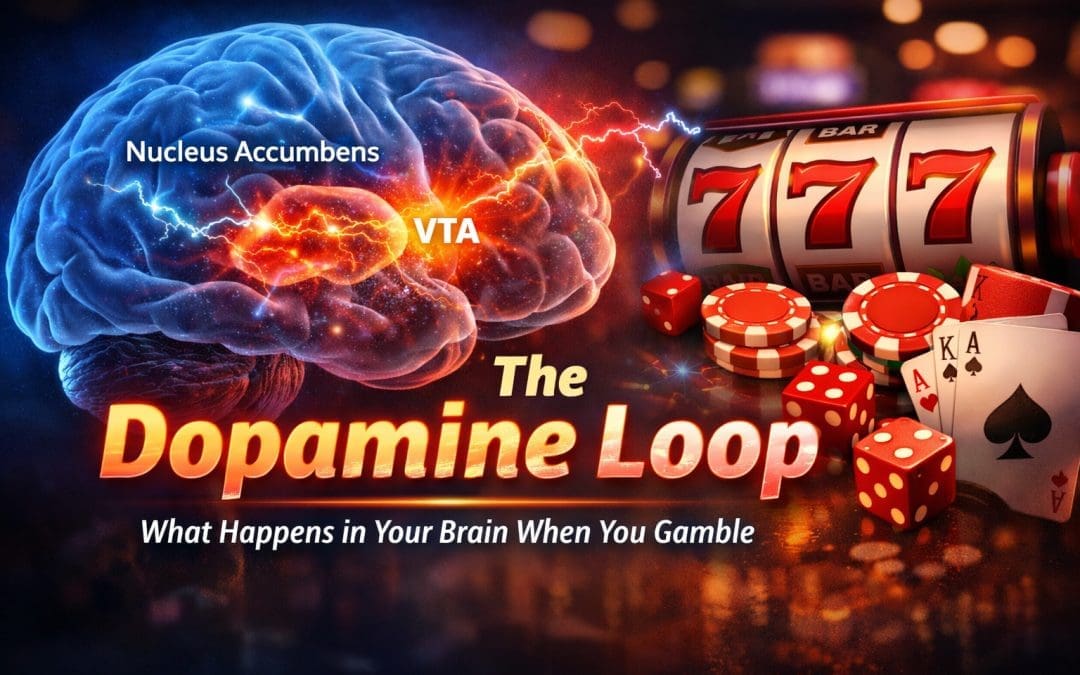
The Dopamine Loop is something that happens in your brain when you do things like gamble. So what is The Dopamine Loop? It is like a circle that happens in your brain.
When you gamble your brain does something. It releases something called dopamine.
Dopamine is a chemical that makes you feel good.
The Dopamine Loop is when your brain gets this dopamine and it makes you want to keep doing the thing that gave you the dopamine.
So with The Dopamine Loop and gambling your brain gets the dopamine when you gamble. Then it makes you want to gamble some ore.
The Dopamine Loop is why some people keep gambling even when they do not want to.
The Dopamine Loop is a strong thing. It can be hard to stop The Dopamine Loop once it starts.
The Dopamine Loop and gambling can be a problem, for some people.
When you walk into a casino or open a betting app your brain does not think of it as a simple decision. Your brain actually thinks that gambling is like talking to the part of your brain that gives you rewards. There are flashing lights. Sounds that ring out and you get really close to winning, which makes you feel like you might actually win. Down something in your brain is getting ready to react. That thing is called dopamine. When it gets going things can get really confusing really fast. The dopamine in your brain is what makes you feel good when you do something that your brain thinks is rewarding, like gambling. So the dopamine, in your brain and gambling are closely. That is what makes it so complicated.
People usually think that gambling is about money.. If you have actually been around it for a while you know that is not the whole story. The feeling you get from gambling is really strong. You can feel it in your chest. Your attention gets focused on one thing. Your thoughts start to think about the time you can place a bet or spin something. To really understand why you feel this way you have to look at how the brain works when it gets something it likes. You have to look at how gambling gets the brain to react in a way. Gambling is, like something that knows how to make the brain do what it wants like playing an instrument. The brain and gambling are connected in a way that makes you want to keep going to it.
Dopamine basics and the brain’s reward system
Dopamine has a weird reputation. People think of it as the thing that makes us feel happy. They say it is like a helper that makes our brain feel good when something nice happens. But the truth is actually more interesting and for people who gamble it is more serious. Dopamine is not something that happens when we feel good. The reality of dopamine is more complicated and, for gamblers dopamine can be bad news.
Dopamine is something that helps our brain work. It is involved in things like motivation and learning. Dopamine helps our brain figure out what is important and what we should pay attention to. It also helps our brain decide what we should do again.
When there is a lot of dopamine activity in our brain it is like our brain is saying this situation is important. It does not mean we are happy at that moment. It means this situation is worth remembering and trying to do again. Dopamine is, like a signal that says we should try to do this thing because it is meaningful.
This is important because gambling is not about getting a payoff every time. It is actually the opposite. Gambling is exciting because you never know what will happen. This not knowing what will happen is what our brains are designed to react to specifically the parts of our brains that deal with dopamine like the dopamine systems. The dopamine systems are really good at responding to things that’re not predictable, like gambling.
What dopamine actually does in everyday life
So when things turn out better than we thought they would the dopamine in our body goes up. We think something will be okay. Then it is really good and that makes the dopamine go up. This increase, in dopamine tells our brain to remember what we did because dopamine and the brain are saying that this thing worked out well for us and our brain is learning from the dopamine that this path was a choice. The dopamine is helping our brain to learn that this path is an one and that is why we remember it.
Food is something we all know and love. When we are hungry we expect to feel full and satisfied. A good meal is one that’s even better than we thought it would be. When we eat something our brain is happy and it makes us want to eat that food again. Over time things, like the smell of food or what time of day it is can make us think about eating. We might even start to feel hungry before we take our first bite of food.
Gambling takes control of the way our brain works by creating its expectations. The gambling process is designed to make us think we will win. That is what gets us excited. Gambling really messes with our minds by playing with what we expect to happen. This is how gambling hijacks the way we think about things like rewards and expectations. It is all, about the gambling experience.
Key brain regions involved in gambling
The brain has different parts that work together to create our reaction to gambling. One of these parts is called the tegmental area or the ventral tegmental area for short. The ventral tegmental area is like a factory that makes dopamine. When something big happens or we think something big is going to happen the cells in the tegmental area start to release more dopamine. The ventral tegmental area is really important, in this process.
The dopamine thing goes from one place to another it travels along the pathway to the nucleus accumbens. This nucleus accumbens is like a spot, for reward and motivation. When the dopamine is active here people feel excited they feel driven they want things. What is really interesting is that the nucleus accumbens lights up when we are looking forward to something, not just when we win something. The dopamine and the nucleus accumbens are working together when we are anticipating something. That is what gets us motivated.
The prefrontal cortex, which is located behind your forehead does a lot of things. It helps you plan things out and control your impulses. The prefrontal cortex also helps you think about what might happen in the run. When you are making choices the prefrontal cortex helps keep you from doing things that are not good for you just because they feel good right now.. When you get a lot of dopamine releases over and over the prefrontal cortex can get weaker. This makes it harder for you to resist things that you want to do away even if they are not good for the prefrontal cortex and you in the long run. The prefrontal cortex is really important, for helping you make decisions.
The dopamine loop in action during gambling
Dopamine loop is a thing where you keep going in a circle. It is like this: you think about something that might happen then it happens then you think about what happened and then you start thinking about it. Gambling makes this circle go fast. It can happen in a few seconds or even less time, than that. This means it can keep happening over without stopping for very long. The dopamine loop just keeps going with gambling because it all happens quickly.
Gambling is different from getting a paycheck or eating a meal. The results of gambling come fast. This speed is what keeps the dopamine systems in our brain working hard and learning quickly. The speed of gambling outcomes is what makes the dopamine systems stay engaged and keep on learning at a pace, which is the case, with gambling.
When we think about something that is going to happen like a fun trip or a special event our brain gets really excited. This is because anticipation creates the dopamine spike. Dopamine is a kind of chemical in our brain that makes us feel happy and excited. So when we are looking forward to something like a birthday party or a vacation anticipation creates the dopamine spike and that is what makes us feel so happy and excited, about the things that are going to happen. Anticipation and the strongest dopamine spike are closely related. That is why we feel this way when we are waiting for something fun to happen.
Here is the part that a lot of people do not understand. The biggest release of dopamine often happens before you get the result not after you get it. When you place a bet or you hit the spin button your brain is already thinking about the rewards you might get. This thinking about what might happen is what makes the dopamine in your brain go up. The dopamine release is a deal and it happens during this thinking phase, which is all about the possible rewards, from the bet or the spin.
When people get brain scans using these machines that take pictures of the brain it shows that the parts of the brain that feel good are working harder when someone is waiting to see if they win or lose at gambling. The not knowing what will happen is actually of exciting. People are not just waiting for the win they are waiting for the moment right before it happens when it feels like anything can happen. The brain imaging studies that use these scans called fMRI scans show this. Gambling is exciting because of the uncertainty and people, like the feeling they get when they are waiting to see what will happen.
So that is why players often say that the excitement goes away once they actually get a win. The excitement stops for a while. There is nothing to look forward to until the next bet starts it all again. Players get a win and then they do not feel the same thrill until they place the next bet and the cycle starts again with the game.
So you want to know about wins and losses and those times when things almost went wrong. Lets talk about wins. A win is when something good happens to you. You do something. It works out really well.
Then there are losses. A loss is when something bad happens to you. You try to do something. It does not work out. This can be very sad and frustrating.
Then there are, near misses. A near miss is when something bad almost happens to you. You are lucky. Things do not go wrong. Near misses can be very scary because they show you what could have happened.
So wins and losses and near misses are all a part of life. You will have wins when things go well. You will have losses when things do not go well.. Sometimes you will have near misses that will make you feel lucky.
When you have a win it makes you want to keep doing what you are doing which is the loop.. If you have losses it does not always mean you will stop because sometimes people keep going even when they are losing. This is the part where the psychology of gambling gets really weird and does not make sense which is what I mean by counterintuitive, about the psychology of gambling.
When we have misses, like when we almost win something it can make us feel pretty good. This is because near misses can activate the dopamine pathways in our brain which’s the same thing that happens when we actually win. You see this a lot with slot machines. For example two of the symbols will line up. The third symbol will stop right next to it just one spot away. Even though we did not really win our brain is going to treat it like we’re really close to winning. Slot machines are really good, at doing this to people. Near misses with slot machines make our brain think that we are there that we just need to keep trying and we will finally win.
This is not something that just happened by chance. It is actually something that was made to happen because of something called ratio reinforcement. This idea comes from the work of B.F. Skinner on something called conditioning. When we get rewards at times after we have done something a few times or maybe a lot of times we keep doing that thing over and over again. Our brain keeps us doing it because we never know when we will get the reward. The brain is always thinking about when the next reward will come so it keeps us playing ratio reinforcement games.
When we have losses small losses or losses that happen quickly it can actually make us feel a little better for a short time. This is because it makes us think that we might win soon. Our way of thinking changes. We start to think about how we can get back what we lost. We might think that one try will make everything okay again. Losses like this can make us want to keep trying because we think that the next time will be the one that fixes everything. Losses are really good, at making us think that one more spin will fix all our problems.
Gambling can really mess with your brain chemistry.
It does this by affecting the way you feel and think.
When you gamble your brain gets a rush of excitement.
This is because of the chemicals that are released in your brain.
The main chemical is dopamine, which’s what makes you feel happy.
Gambling plays on this feeling so you want to keep doing it.
- It can make you feel like you are on a high
- It can make you want to keep going for more
The problem is that this can get out of control.
Gambling can hijack your brain chemistry so you do things you would not normally do.
This is what makes it so bad for some people because they cannot stop.
Gambling is using your brain chemistry against you.
It is like it is taking over. That is not a good thing.
You should be careful with gambling because it can really mess with your brain.
It can change the way you think. The way you feel.
That is why it is so important to be careful so you do not get caught up in it.
Gambling can be fun. It can also be very bad for you.
You have to be careful and make sure you do not let it get out of control.
The brain chemistry that is involved in gambling is very powerful.
It can make you do things that you would not normally do.
That is why it is so important to be aware of it and to be careful.
You do not want to let gambling take over your life.
It can ruin your life and the lives of those around you.
So you have to be careful and make sure you do not get caught up in it.
Gambling and brain chemistry is a bad combination.
It can lead to all sorts of problems. It can ruin your life.
You have to be careful and make sure you do not let it get out of control.
Gambling is not worth it if it is going to mess with your brain chemistry.
You have to think about what’s important, to you and make sure you do not let gambling take over.
Your brain chemistry is very important. You have to take care of it.
You do not want to let gambling mess with it because it can have bad consequences.
So you have to be careful and make sure you do not get caught up in it.
The best thing to do is to stay from gambling and to find other things to do.
That way you can avoid the problems that come with it. You can take care of your brain chemistry.
You have to be strong. You have to be careful.
You do not want to let gambling take over your life because it can ruin everything.
So you have to stay from it and you have to find other things to do.
That is the way to take care of your brain chemistry and to avoid the problems that come with gambling.
When you do something over and again it can really change the way your brain reacts to the dopamine loop. At first something might feel really exciting. After a while it starts to feel like something you need to do. The dopamine loop is something that can affect you in a way and it is interesting to think about how the dopamine loop can change the way you feel about things.
Building tolerance and cravings
Dopamine systems change over time. When dopamine systems are stimulated much the receptors that pick up on dopamine systems do not work as well. So the same amount of dopamine systems does not have the impact as it used to. This is what we call tolerance to dopamine systems.
So when we talk about gambling it means that people who gamble for fun need to make bigger bets or play for longer periods of time. They might even try games to get that same feeling they had before. The reason for this is that our brain is not excited about something anymore. What it really wants is to feel that feeling it had before you know that feeling we get from dopamine. The brain is looking for a way to get back, to that feeling.
Cravings show up during this time. These cravings are not something we want really badly but our body is actually telling us something. Our brain has figured out that gambling is a way to make us feel good. The brain thinks that gambling is a way to get a good feeling. When we do not get that feeling we start to feel uneasy. Gambling is what our brain is used to. When we stop our brain notices that something is missing and that is when the discomfort starts. The brain is looking for that feeling it gets from gambling.
The addiction cycle forms
When people get used to something it can make things worse. The feeling of waiting to see what happens gets stronger but the good things that happen do not feel as good. The bad things that happen feel really bad. The thing that makes people happy which is called dopamine starts to come from the act of betting itself not from winning or losing. People start to like the feeling of betting than the feeling of winning. The act of gambling becomes what makes people happy, not the result of the gamble.
Decision making is different too. When the prefrontal cortex is not active enough it is harder to stop and think about what might happen. Thoughts like I should stop doing this. This is costing too much money do not feel as important as they should. The brain wants to keep doing what it is doing to feel good rather than thinking about what is good for decision making and stability in the long run. The brain prioritizes decision making that helps to restore the feeling it is looking for than decision making that helps with long term stability and decision making that is good, for the brain. Decision making is affected by the brains need to feel good and decision making can be harder when the brain is not working well.
When people get to this point their gambling habits can be really bad. The thing is, this kind of behavior can actually be considered a problem like a disorder. It is called a gambling disorder. This is what the DSM-5 says.
The DSM-5 has some rules to figure out if someone has a gambling disorder.
Some of these rules are:
- Person cannot control how much they gamble.
- They keep on gambling even when it hurts them.
- They bet more money to feel good.
Long-term effects on the brain
When you are around gambling for a time it can really affect you. The feeling you get from winning it is like a high. This can be very hard to shake off. Gambling can make your body get used to these feelings. It does not go away quickly. Extended exposure to gambling can leave marks on you that do not disappear overnight. These marks can be, from the way gambling affects your body with dopamine cycles.
Dopamine dysregulation and withdrawal
 When people stop gambling all of a the dopamine activity in their brain goes down really low. This is basically what we call withdrawal from gambling even though it is not, about taking some kind of drug. People who experience this say they feel irritable they get restless their mood is really low. They just do not enjoy the things they used to like doing every day.
Things that used to make me happy like spending time with friends doing stuff I love and eating food just do not feel the same anymore. My brain has changed what makes it feel good. Now it needs really exciting and unexpected things to happen. The usual things that make me happy like socializing and hobbies and food just are not enough for my brain anymore. The brain has gotten used to things that’re really intense and unpredictable so normal things, like socializing and food struggle to make me feel happy.
This situation is not going to last but it can feel like it is never going to end when you are, in the middle of it. A lot of people who relapse do so because they want to get from the empty feeling they get when they stop getting that rush of excitement not because they really want to win money. The feeling of dopamine withdrawal is really uncomfortable. People want to escape it.
Links to compulsive gambling disorder
People who have a problem with gambling for a time can get stuck in bad habits. When doctors look at pictures of the brains of people with a gambling problem they often see that some parts of the brain are working differently. The part of the brain that says something is important is too focused, on things that have to do with gambling while the part of the brain that helps people control themselves is not working enough. The gambling problem is still controlling the person because the brain is still tuned in to gambling cues and the control systems are just not keeping up with the gambling cues.
That imbalance is the reason why triggers can feel really overwhelming. Sometimes it is a sound or it is an app notification or even it is a memory that can make the person want something so badly. The brain has learned that these things, like triggers are important.
Breaking free from the dopamine trap
To get out of the dopamine loop is not about getting rid of dopamine. It is about teaching the brain to like lots of things that make us happy. The dopamine loop is something we need to escape and escaping the dopamine loop is about changing how the brain responds to things that make us feel good. We need to help the brain like the dopamine from sources, not just a few. This way we can break free from the dopamine loop and feel happy, about things.
Resetting the reward system
The best way to deal with this problem is to give it time and have a plan. When you stop doing much of something like gambling your brain starts to work properly again. This is because the dopamine receptors in your brain get sensitive again. The thing is, this process takes a while. It can take a weeks or even a few months. It really depends on how much you were gambling and how long you were doing it. The more you gamble the longer it takes for your brain to recover. Gambling behavior is a part of this. When you stop gambling your dopamine receptors regain sensitivity. This is news for people who want to stop gambling. Time and structure are the keys, to making this happen.
Replacing gambling with things that give you rewards really helps. For example doing exercise making art learning things and spending time with friends can help your body get back to normal. At first these things might not be as exciting as gambling.. It is better to do them all the time even if they are not super exciting because that is what really matters. Doing these things every day is more important, than trying to find something that’s really intense.
Cognitive strategies are important too. When you know how things like almost winning and waiting for something to happen can affect the brain they do not seem as powerful. If you can say to yourself “this is just my brain getting a burst of dopamine” than thinking it is something that really means something, then cognitive strategies and dopamine spikes and anticipation lose some of their control over you. Cognitive strategies, like this can really help.
Support matters a lot. Having people to hold you accountable like a therapist, a group of friends who are going through the thing or someone you really trust helps you stay in control. This outside help is really useful until you can regulate your emotions and behaviors on your own again. Support from people is important because it helps you get stronger and more in control of yourself which is something that support and accountability through things, like therapy or talking to someone you trust can really help with.
Why understanding the dopamine loop matters
Gambling problems are usually seen as people being bad or making money decisions.. That is not what is really going on. The thing with gambling addiction is that it is actually a problem with how the brain learns things and it is about the reward system, in our brain. Gambling addiction is what happens when our brain gets this learning wrong.
The dopamine loop is really interesting because it helps us understand why people who are smart and disciplined can still lose control. Sometimes it is harder to stop doing something than it’s to start doing it. The thing is, the urge to keep doing something often does not make sense and it is not about being logical. When you think about gambling as something that affects your brain than something that is wrong with you as a person it becomes easier to deal with and you can be kinder to yourself. The dopamine loop is important to understand because it explains why people get caught up in things, like gambling.
The brain is adaptable. The same plasticity that allows gambling to hijack dopamine can also allow recovery. Understanding what is happening under the hood is the first step toward stepping out of the loop and reclaiming control.